
Bug Treasure Hunt-Kick Start
My bug names are on the photo’s. I only found a ladybug in my garden sitting on a leaf. The rest of the bugs are images I found of New Zealand bugs.

Peripatus – Step it Up
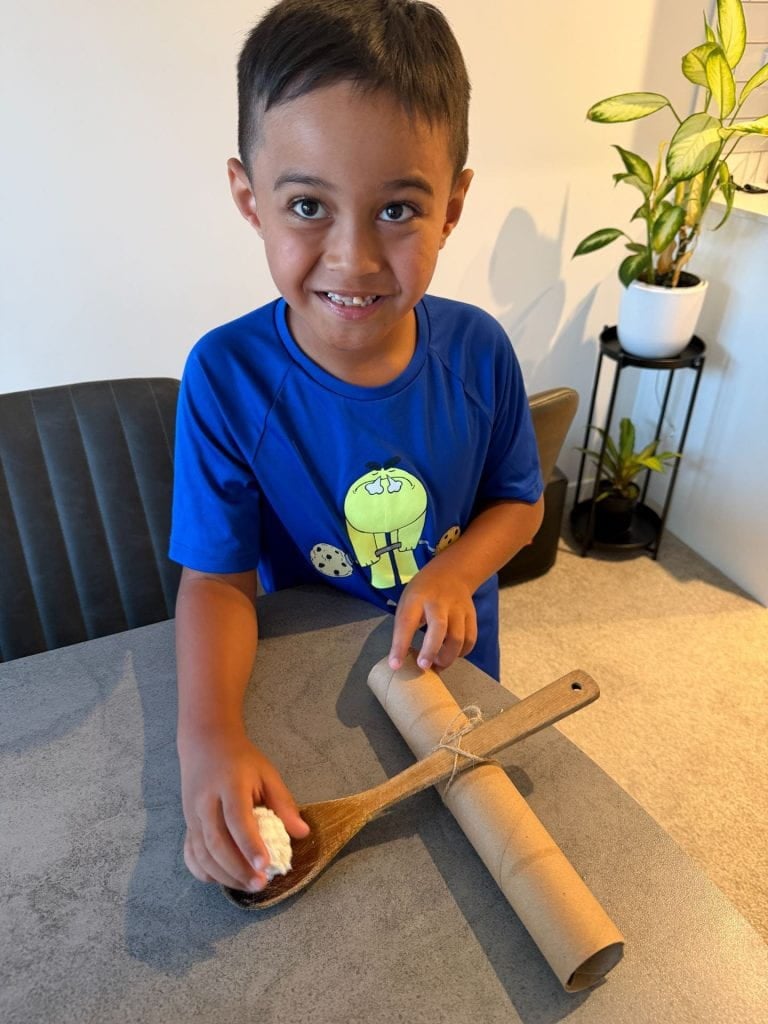
I made this paper shooting catapult, I followed the instructions on the video and used a finished paper towel roll, my moms cooking spoon and some string. I used scrunched up balls of paper towel as amo for lainching. It was fun. I have included a video below.
My catapult is like a peripatus because when it gets frightened or wants food, it shoots something out. A peripatus shoots sticky slime to catch bugs or stay safe, and my catapult shoots an object to reach a target.
We both use force to send something forward instead of going close.
Peripatus – Kick Start
I made mash potato for my peripatus inspired mushy snack.
A peripatus catches its food by shooting sticky slime to trap it, then slurps it up with its mouth.
Pekapeka-Roosting Locally-Step it up
This bat box helps bats stay safe, warm, and happy while they eat lots of insects nearby.Bats like living here because:
1. They can feel safe and quiet because the entrance is small and at the bottom, and the birds and rats can’t get in. The box is placed high up on a tree and there are no perches, so predators can’t sit on it
2. It is close to food because it’s in the Wetlands. This means bats have a good food supply to hunt for bugs
3. Families can stay together as it is big enough for lots of bats to roost together. It has narrow spaces inside so bats can snuggle close (they like this!) and the wood keeps the box warm and dry.
Pekapeka-Living Locally-Kick Start
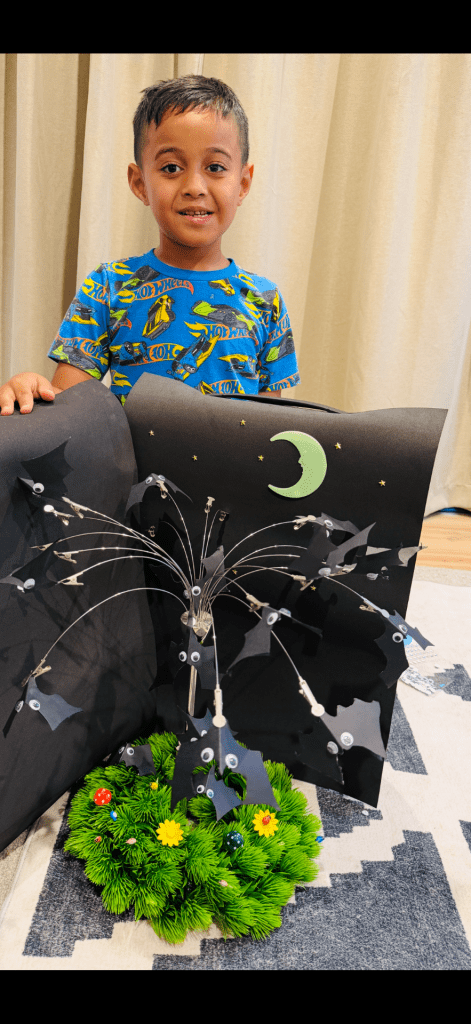
I jazzed up my ornament by adding googlie eyes to my bats. I also jazzed up my ornament by creating a background with stars and the moon. I created a forest floor with some flowers to attract the bugs (i had ladybugs on the floor) so the bats on the ground can forage for food. I also added some mushrooms just to add colour and make it special. Our stand which my brother and I share we found at a thrift store and use it to represent a tree in which the bats were hanging from. It worked out well for us because it came with the clips so it made it easy to place the bats. I have also icluded a video so you can see a close up of the ladybugs.
Pekapeka match up quiz
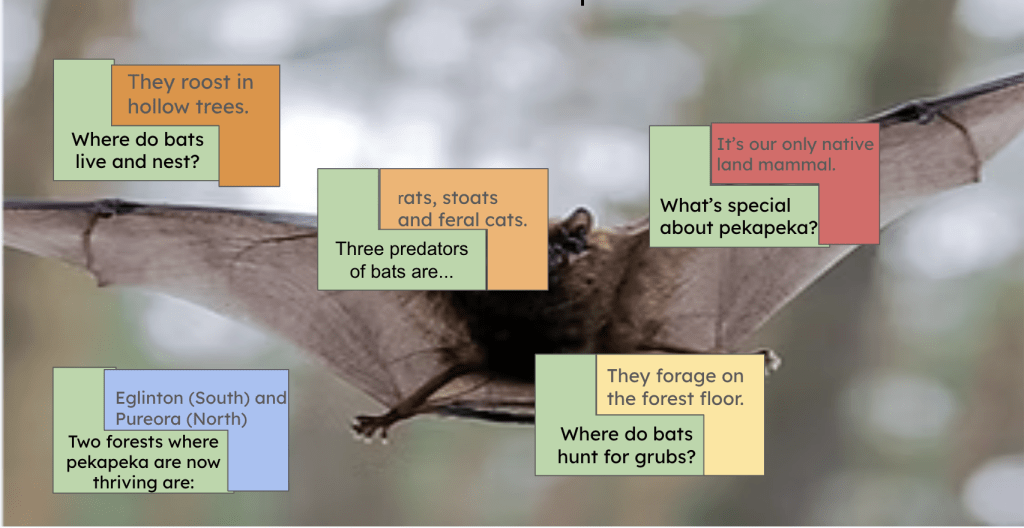
This was fun. I want to post up my finished work
Koha o Aotearoa He Taumata Anō
Maxwell’s Koha of Aotearoa Song
On the first day of koha, Aotearoa sent to me a Kea in a Rata tree.
On the second day of koha, Aotearoa sent to me two Tuatara Kanikani, and a Kea in a Rata tree.
On the third day of koha, Aotearoa sent to me three Kaha Taniwha, two Tuatara Kanikani, and a Kea in a Rata tree.
On the fourth day of koha, Aotearoa sent to me four Orotika Ika, three Kaha Taniwha, twoTuatara Kanikani, and a Kea in a Rata tree.
On the fifth day of koha, Aotearoa sent to me five wera manu, four Orotika Ika, three Kaha Taniwha, two Tuatara Kanikani, and a Kea in a Rata tree.
On the sixth day of koha, Aotearoa sent to me six moko Whakarongo, five wera manu, four Orotika Ika, three Kaha Taniwha, twoTuatara Kanikani, and a Kea in a Rata tree.
On the seventh day of koha, Aotearoa sent to me seven manu Horoi, six moko Whakarongo, five wera manu, four Orotika Ika, three Kaha Taniwha, two Tuatara Kanikani, and a Kea in a Rata tree.
On the eighth day of koha, Aotearoa sent to me eight pepe noho, seven manu Horoi, six moko Whakarongo, five wera manu, four Orotika Ika, three Kaha Taniwha, two Tuatara Kanikani, and a Kea in a Rata tree.
On the nineth day of koha, Aotearoa sent to me nine moko haere, eight pepe noho, sevenmanu Horoi, six moko Whakarongo, five wera manu, four Orotika Ika, three Kaha Taniwha, two Tuatara Kanikani, and a Kea in a Rata tree.
On the tenth day of koha, Aotearoa sent to me ten kau whakapai, nine moko haere, eight pepe noho, seven manu Horoi, six moko Whakarongo, five wera manu, four Orotika Ika, three Kaha Taniwha, two Tuatara Kanikani, and a Kea in a Rata tree.
On the eleventh day of koha, Aotearoa sent to me eleven kaka piki, ten kau whakapai, nine moko haere, eight pepe noho, seven manu Horoi, six moko Whakarongo, five wera manu, four Orotika Ika, three Kaha Taniwha, two Tuatara Kanikani, and a Kea in a Rata tree.
On the twelfth day of koha, Aotearoa sent to me twelve ngeru hoki, eleven kaka piki, ten kau whakapai, nine moko haere, eigth pepe noho, sven manu Horoi, six moko Whakarongo, fivw wera manu, four Orotika Ika, three Kaha Taniwha, two Tuatara Kanikani, and a Kea in a Rata tree.
Mokomoko Manor – Step It Up
The weather in Auckland today was not the best so I had to build my lizard lounge using lego. I tried my best with what lego i had. I hope you like it.